Venues
National Cowboy & Western Heritage Museum
National Cowboy & Western Heritage Museum needs a plan built around the room itself: how freight enters, how guests move, where service activity can sit, and how the property should be returned after the program closes.
For National Cowboy & Western Heritage Museum, the job is to protect both sides of the event: the guest-facing experience and the service path that keeps the room operating cleanly.
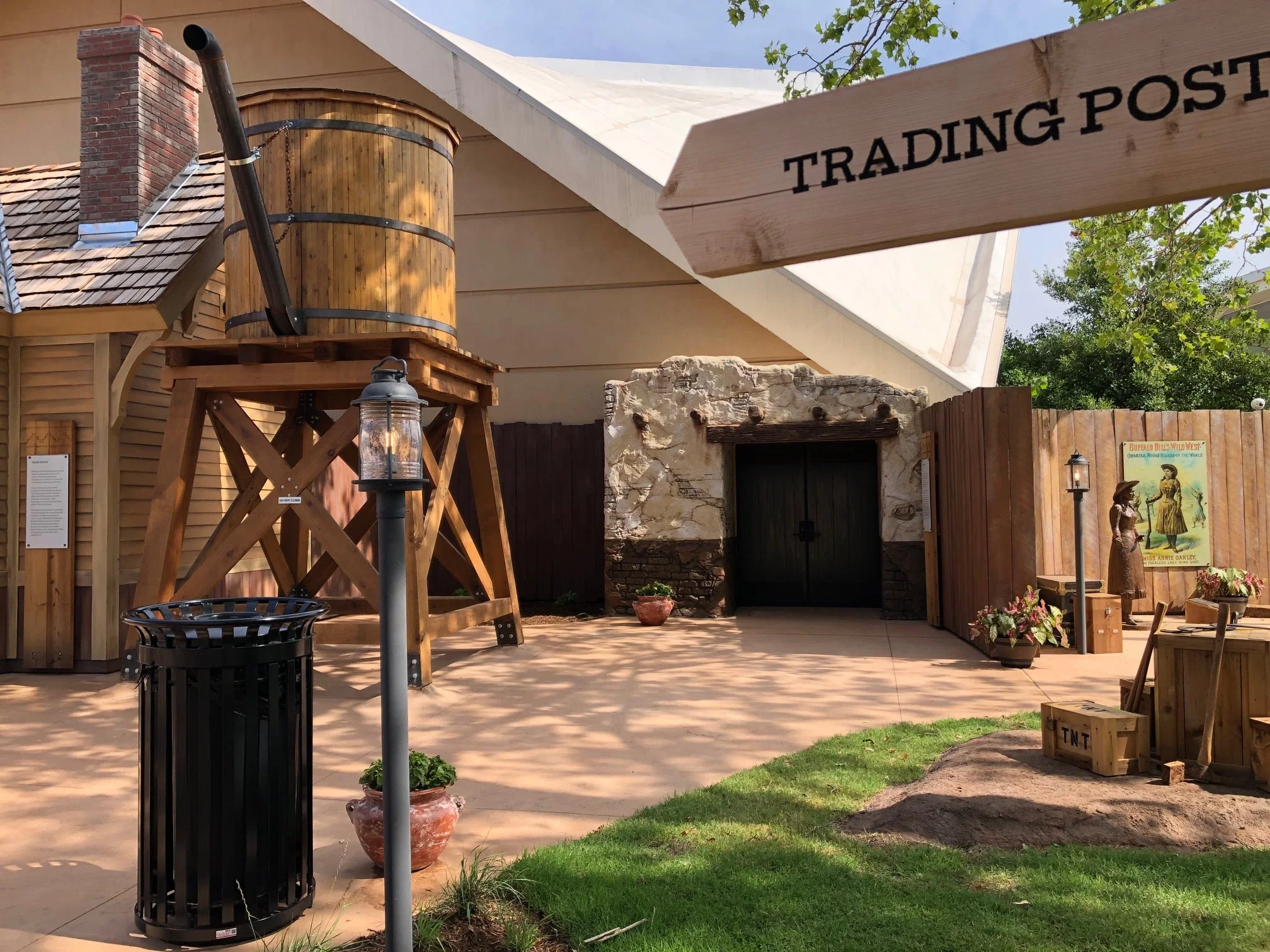
National Cowboy & Western Heritage Museum planning priorities
National Cowboy & Western Heritage Museum planning starts by naming the priorities that will affect the room before the schedule gets tight.
Those priorities give the team a clearer way to compare scope, budget, timing, and show-site support without losing the practical details.
- Gallery pace
- Collection respect
- Exhibit balance
- Formal close
National Cowboy & Western Heritage Museum heritage pace
Heritage pace is the first rule because the property already carries a strong point of view.
The event should feel like a guest inside that point of view instead of trying to rewrite it.
Keep the first read quiet.
Move the group at a heritage pace.
Protect the collection tone.
Do not let the route turn into a convention corridor.
National Cowboy & Western Heritage Museum collection balance
Collection balance means the event should sit beside the museum, not over it.
That keeps the room from sounding like a ballroom in disguise.
National Cowboy & Western Heritage Museum evening handback
The evening handback should leave the galleries looking like galleries again.
A formal close keeps the museum tone intact after the event is gone.
Working at National Cowboy & Western Heritage Museum
The Sam Noble Special Events Center measures 16,500 square feet.
Capacities of 1,000 banquet, 1,250 theater, 1,400 cocktail, 800 classroom, and 50 trade booths.
Running a project here means working against the venue's own exhibitor manual, dock windows, and service-order deadlines. Those details are confirmed before any build commits to fabrication.
Oklahoma City trade show market
Trade shows in Oklahoma City move fast.
The attendees vary by show — some weeks draw regional operators, others pull international buyers in for a single conference — but the floor mechanics stay consistent. Every booth needs graphics production, show services, labor calls, and a plan for the specific building it's landing in.
The Norman property offers more than 75,000 square feet of event space and up to 33 meeting rooms, making it a true south-metro conference option rather than a small hotel ballroom.
The venue can support events ranging from 10-person meetings to 10,000-person events, which strengthens Bricktown's special-events and hospitality positioning, which sets the practical ceiling for a booth program working the market.
The advantage of a local Oklahoma City team
Trade Show Services keeps the work local.
Working with a Oklahoma City-based shop matters most when something goes wrong on-site. Solutions live within driving distance instead of on another coast.
Consistency across show dates is the other reason to hire local. The same crew that built the booth runs the install, knows the pack-out, and catches the small things — a missing hardware pack, a graphic edge that needs reseating, a storage crate routed to the wrong bay — without needing the client team to intervene.
Who handles what during the Oklahoma City install window
Most of what goes wrong on a Oklahoma City install traces back to assumptions about labor. Staying inside the venue's published rules for the specific show prevents it.
Practically, that means pulling the current exhibitor manual for every show and confirming a handful of items in writing: which tasks the venue's house crews cover, which tasks the show's general contractor covers, and what an exhibitor or their appointed contractor can handle without escalation.
What's included in the project scope
Project scope usually spans design, fabrication, graphics, AV, labor coordination, freight, install, show-hours support, and strike.
Individual projects layer or remove items based on scope.
Good execution comes from keeping the team small and the handoffs short. Every extra vendor in the chain adds a communication layer and a place where details get lost.
Multi-show programs add asset management: storage, refurbishment, graphic swaps, and scheduled re-kitting so the booth rolls cleanly from Oklahoma City to the next city on the calendar.
Scope boundary is as important as scope inclusion.
From first call to strike
Every engagement begins the same way. From those four inputs, a real plan can be built.
After the brief, the work turns to the building itself.
Production covers fabrication, graphics, AV spec, rentals, and crew chief assignment. It is the longest phase of most projects and the one where timelines are either protected or lost.
Install days are owned by a single on-site lead.
Throughout show hours, the on-site lead stays present.
Strike and closeout happen the same day.
Budget and timeline
Every project has the same cost drivers.
Six variables drive the cost: custom versus rental, booth footprint and complexity, venue-specific labor and rigging fees, graphics scope and substrate, freight distance and timing, and the number of on-site supervision days.
Lead time drives everything. Custom: 16 to 20 weeks. Rental: 8 to 12.
How project performance gets measured
The measure of a good engagement is simple: on-time install, no venue callouts, clean show hours, and a closeout that makes the next event easier to book.
Most programs in Oklahoma City are evaluated on lead-capture volume, meetings booked on the floor, and qualified-pipeline attribution after the show. The booth is a means to those numbers — it is not the number itself.
A week after the show, the booth's actual floor performance is already clearer than any pre-show projection. We document those observations alongside the technical closeout so the next cycle inherits real signal, not nostalgia.
National Cowboy & Western Heritage Museum planning questions
Q: How much lead time is ideal?
Custom builds run best with 16 to 20 weeks of lead time. Rentals take 8 to 12 weeks.
Q: What information kicks off a project?
The show, the venue, the booth number, the dates, and a target budget range. From those, an initial scope and a realistic cost come back within a few days.
Q: Who runs the booth on-site?
One named show-site lead runs the install, the show hours, and the strike. That person carries the floor plan and the punch list from crates to doors and reports up once a day.
Q: Can the booth travel to the next city on our calendar?
Same structure, swappable graphics, standard crates.
Q: What happens if something breaks during show hours?
The on-site lead handles it.
National Cowboy & Western Heritage Museum planning frame
National Cowboy & Western Heritage Museum needs a plan built around the room itself: how freight enters, how guests move, where service activity can sit, and how the property should be returned after the program closes.
For National Cowboy & Western Heritage Museum, the job is to protect both sides of the event: the guest-facing experience and the service path that keeps the room operating cleanly.
National Cowboy & Western Heritage Museum operating details
The first decisions should name what has to be built or rented, who owns approvals, what the venue needs early, and which parts of the plan can still change without creating avoidable rework.
That keeps the project practical for Oklahoma City metro teams working across convention spaces, fairgrounds buildings, hotels, museums, arenas, and regional meeting corridors.
National Cowboy & Western Heritage Museum closeout and repeat value
Closeout should leave the client with a clean record of what fit the room, what slowed the work, what should be refreshed, and what can be repeated on the next date.
That record is what turns one successful event into a stronger calendar instead of forcing the team to solve the same problems again.