Industries
Food and Beverage Trade Show Services
Food and Beverage Trade Show Services should help buyers see credible proof quickly, whether the event needs demos, samples, technical conversations, private meetings, or clear follow-up.
For Food and Beverage Trade Show Services, the booth has to respect how that audience evaluates risk, proof, product value, and the next conversation after the event.
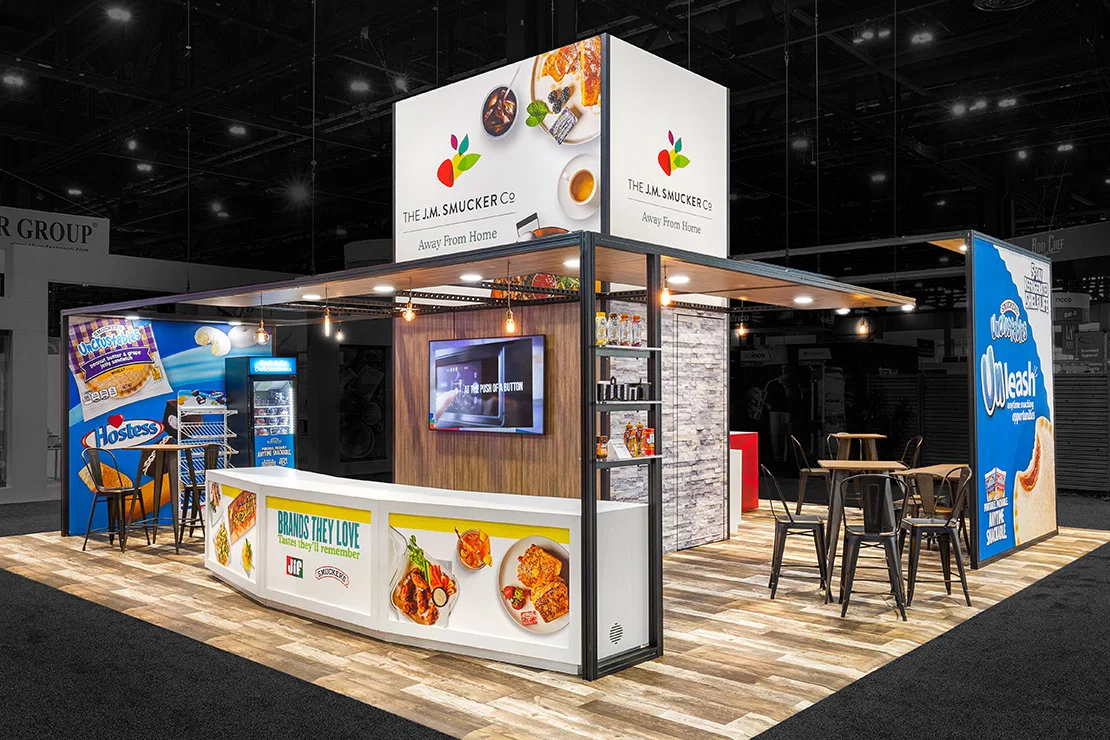
Food and Beverage Trade Show Services planning priorities
Food and Beverage Trade Show Services planning starts by naming the priorities that will affect the room before the schedule gets tight.
Those priorities give the team a clearer way to compare scope, budget, timing, and show-site support without losing the practical details.
- Tasting line
- Cold hold
- Sample turns
Food and Beverage Trade Show Services tasting line
The tasting line is the point because this category lives in bite-size movement, not quiet packet control.
Visitors need a clear place to queue, taste, react, and keep the line moving without turning the booth into a jammed counter.
Keep sample turns visible from the aisle.
Hold the line shape before it turns into a crowd problem.
Treat service rhythm as the booth's main operating story.
Food and Beverage Trade Show Services cold hold
Temperature control, replenishment, and reset pacing have to stay disciplined while the booth still feels generous to the guest.
That makes the section about tasting logistics and appetite management.
Oklahoma City as a trade show city
Exhibiting in Oklahoma City means working inside an established event ecosystem. The venues, the labor model, and the local production capacity all behave in predictable patterns.
Scope gets tighter; standards don't.
The resort is five minutes from downtown Oklahoma City and about 20 minutes from the airport, which sets the practical ceiling for a booth program working the market.
The official Hilton property sections say Embassy Suites Norman sits directly off I-35, about 21 miles south of Oklahoma City, with 50,000 square feet of meeting space — a useful reference point when sizing a project.
Line items on a typical project
Food and beverage trade show services projects typically include design work, fabrication or rental sourcing, graphics production, show-service paperwork, freight, install, show-hours coverage, and strike.
Individual projects layer or remove items based on scope.
The handoffs on a food and beverage trade show services project matter almost as much as the line items. Design has to hand a build-ready drawing to fabrication. Every handoff is a place quality can drop.
Multi-show programs add asset management: storage, refurbishment, graphic swaps, and scheduled re-kitting so the booth rolls cleanly from Oklahoma City to the next city on the calendar.
Those run alongside the engagement rather than inside it.
Oklahoma City labor and venue services
There is no single labor model for Oklahoma City trade shows. The right approach depends on the specific venue and the show organizer's contracts.
The workable version of Oklahoma City labor planning is boring on purpose: read the manual, match the scope to its categories, order what the venue sells directly, and schedule everything else around its posted windows. Surprises almost always trace back to a step someone skipped.
Oklahoma City convention venues and meeting properties
Every Oklahoma City show takes place in a specific building with its own rules. The venues below come up most often on our production calendar.
The plan has to match the specific building.
The Pavilion. The building provides a 70,000-square-foot trade show floor.
The same section highlights overhead doors with direct floor access and a loading dock.
Oklahoma Expo Hall is one of the anchors.
Centennial Building: the venue has 28,800 square feet for shows, receptions, parties, and small expos.
The process from start to finish
Every project starts with a scope conversation: the show, the venue, the booth number, the dates, and the budget frame. Ten minutes of specifics produces a better plan than a week of generalities.
Once scope is clear, the venue work begins.
Production brings the plan into physical form: fabrication, graphics, AV, rentals, and the named lead who will run the floor.
One named show-site lead runs the install.
Show-hours coverage is part of every engagement — not a premium add-on. On-floor support keeps the booth running while the client team runs the pipeline.
That document drives the next booking.
Cost and lead time
An honest quote itemizes the variables. There is not a single price — there is a configuration.
Cost scales with how it is built, how big it is, what the venue charges for its own services, what the graphics look like, how far the crates travel, and how many days the team stays on-site.
Rental programs run on 8 to 12.
Outcomes we optimize for
A project runs well when install clears the venue's published window, all show services land as ordered, the booth performs across every show day without pulling the client team off pipeline work, and strike clears the dock before the next occupant loads in.
Trade show ROI is measured at the lead and pipeline level.
The post-show debrief is where the numbers get connected back to the physical booth. Which demo station drew traffic, which meeting area closed more conversations, which graphic zone attracted dwell time — that feedback shapes the next build rather than getting lost.
Why Trade Show Services
Trade Show Services is Oklahoma City's local trade show team, with in-house design, fabrication, graphics, and show-site crews. One shop, one point of contact, one accountable lead on every project.
Local fabrication means real-time problem-solving. A graphic that needs to be reprinted at 6 a.m.
Clients who run repeat programs across multiple dates end up paying less per event when the same team handles everything. Less re-briefing, less re-training, less re-checking — the operational overhead drops year over year.
Food and Beverage Trade Show Services planning questions
Q: Do you work at the Pavilion?
Yes. The building provides a 70,000-square-foot trade show floor.
Q: How much lead time is ideal?
Custom builds run best with 16 to 20 weeks of lead time. Rentals take 8 to 12 weeks.
Q: What information kicks off a project?
The show, the venue, the booth number, the dates, and a target budget range. From those, an initial scope and a realistic cost come back within a few days.
Q: Who runs the booth on-site?
One named show-site lead runs the install, the show hours, and the strike. That person carries the floor plan and the punch list from crates to doors and reports up once a day.
Q: Can the booth travel to the next city on our calendar?
Same structure, swappable graphics, standard crates.
Q: What happens if something breaks during show hours?
The on-site lead handles it.
Food and Beverage Trade Show Services planning frame
Food and Beverage Trade Show Services should help buyers see credible proof quickly, whether the event needs demos, samples, technical conversations, private meetings, or clear follow-up.
For Food and Beverage Trade Show Services, the booth has to respect how that audience evaluates risk, proof, product value, and the next conversation after the event.
Food and Beverage Trade Show Services operating details
The first decisions should name what has to be built or rented, who owns approvals, what the venue needs early, and which parts of the plan can still change without creating avoidable rework.
That keeps the project practical for Oklahoma City metro teams working across convention spaces, fairgrounds buildings, hotels, museums, arenas, and regional meeting corridors.
Food and Beverage Trade Show Services closeout and repeat value
Closeout should leave the client with a clean record of what fit the room, what slowed the work, what should be refreshed, and what can be repeated on the next date.
That record is what turns one successful event into a stronger calendar instead of forcing the team to solve the same problems again.