Services
Large Format Printing
Large Format Printing in Oklahoma City is planned around scope ownership, venue timing, freight movement, labor, graphics, AV, and the field decisions that have to hold once move-in starts.
For Large Format Printing, the strongest scope keeps design, rentals, labor, technical support, and closeout connected so the client is not left coordinating the hard parts alone.
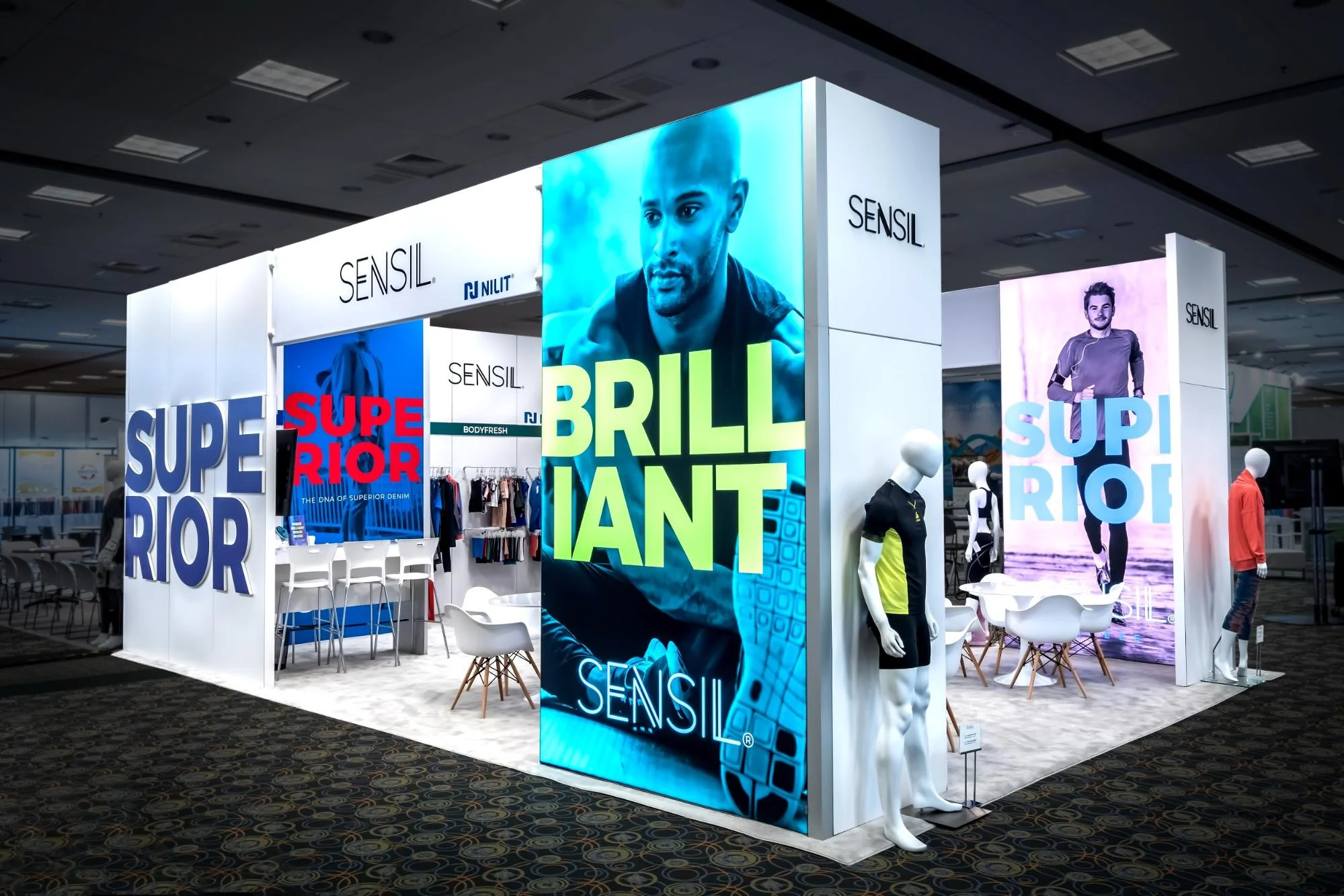
Large Format Printing planning priorities
Large Format Printing planning starts by naming the priorities that will affect the room before the schedule gets tight.
Those priorities give the team a clearer way to compare scope, budget, timing, and show-site support without losing the practical details.
- File prep
- Enlargement discipline
- Finish choice
- Shipping protection
- Oversized handling
Large Format Printing file prep and enlargement discipline
At large scale, weak files get exposed immediately. Resolution, bleed, type weight, and image treatment all need to be checked against the final viewing distance rather than approved at laptop size and forgotten.
A strong prepress pass protects the brand from soft imagery and awkward typography once the graphic is hanging over the aisle.
Large Format Printing finish choice and oversized handling
Oversized graphics also ask more from the material. Fabric, rigid board, mesh, vinyl, and tension systems all handle differently in transit and on site, and the finish needs to match the way the piece will actually be installed and struck.
That is what keeps a bold print concept from becoming a wrinkled logistics problem.
Large Format Printing shipping protection and install fit
The largest prints are often damaged before anyone sees them because packaging and handling were treated casually. Tubes, corner guards, fold rules, and staging notes should all be chosen with the install path in mind.
When that protection is right, the print lands on the wall looking as intentional as it did on the proof.
What drives the Oklahoma City calendar
Oklahoma City runs one of the busiest trade show calendars in the region. Convention weeks stack close together, hotel blocks compete for the same nights, and the venues themselves shape what is possible on the floor.
Trade show weeks in Oklahoma City compress decisions.
Planning should account for a 435-acre campus with an 8,000-seat modern arena and six traditional trade show buildings plus outdoor expansion areas, which sets the practical ceiling for a booth program working the market.
The Norman property offers more than 75,000 square feet of event space and up to 33 meeting rooms, making it a true south-metro conference option rather than a small hotel ballroom — a useful reference point when sizing a project.
The buildings that host Oklahoma City events
Different Oklahoma City venues mean different floor plans, different labor rules, and different freight realities.
A venue walk — either in person or via the published floor plan — is the step that reveals constraints no spec sheet shows. Column spacing, real ceiling height at the grid point, and dock access shape what's actually buildable.
Bennett Event Center. The building offers 201,000 square feet of continuous exhibit space.
The venue includes a 12,000-square-foot front lobby and a 10,000-square-foot commercial catering kitchen.
The Pavilion is one of the anchors. The building provides a 70,000-square-foot trade show floor.
Oklahoma Expo Hall: oklahoma Expo Hall offers 66,822 total square feet for shows, receptions, parties, and small expos.
How Oklahoma City floor operations work
Labor in Oklahoma City runs venue-by-venue, not citywide.
Practically, that means pulling the current exhibitor manual for every show and confirming a handful of items in writing: which tasks the venue's house crews cover, which tasks the show's general contractor covers, and what an exhibitor or their appointed contractor can handle without escalation.
Scope on a large format printing project
Large format printing projects typically include design work, fabrication or rental sourcing, graphics production, show-service paperwork, freight, install, show-hours coverage, and strike.
Typical line items include booth structure (custom or rental), graphics and print, AV and lighting, show-service orders (power, internet, rigging), labor calls against the venue's rules, freight both ways, on-site supervision, and post-show closeout documentation.
A bad one has many, because they weren't.
For programs that repeat, asset management becomes part of the engagement — storage, graphic rotation, refurbishment, and re-crating are planned rather than one-off.
Out of scope by default are show organizer fees, booth lease costs paid directly to the show, staff travel and per diems, and any custom software or data-capture tooling the client runs on its own stack. Those stay on the client side and plug into the project through coordination, not rebilling.
How a project runs
Every engagement begins the same way. From those four inputs, a real plan can be built.
After the brief, the work turns to the building itself.
Production covers fabrication, graphics, AV spec, rentals, and crew chief assignment. It is the longest phase of most projects and the one where timelines are either protected or lost.
Install days are owned by a single on-site lead.
Throughout show hours, the on-site lead stays present.
Strike and closeout happen the same day.
What it costs and how fast it moves
Every project has the same cost drivers.
Six variables drive the cost: custom versus rental, booth footprint and complexity, venue-specific labor and rigging fees, graphics scope and substrate, freight distance and timing, and the number of on-site supervision days.
Lead time drives everything. Custom: 16 to 20 weeks. Rental: 8 to 12.
Outcomes we optimize for
The measure of a good engagement is simple: on-time install, no venue callouts, clean show hours, and a closeout that makes the next event easier to book.
Most programs in Oklahoma City are evaluated on lead-capture volume, meetings booked on the floor, and qualified-pipeline attribution after the show. The booth is a means to those numbers — it is not the number itself.
A week after the show, the booth's actual floor performance is already clearer than any pre-show projection. We document those observations alongside the technical closeout so the next cycle inherits real signal, not nostalgia.
How we're built to run your project
Trade Show Services keeps the work local.
Working with a Oklahoma City-based shop matters most when something goes wrong on-site. Solutions live within driving distance instead of on another coast.
Consistency across show dates is the other reason to hire local. The same crew that built the booth runs the install, knows the pack-out, and catches the small things — a missing hardware pack, a graphic edge that needs reseating, a storage crate routed to the wrong bay — without needing the client team to intervene.
Large Format Printing planning questions
Q: Do you work at OG&E Coliseum?
Yes. The venue totals 216,164 square feet. Projects at that building are planned against its specific floor rules.
Q: How much lead time is ideal?
Custom builds run best with 16 to 20 weeks of lead time. Rentals take 8 to 12 weeks.
Q: What information kicks off a project?
The show, the venue, the booth number, the dates, and a target budget range. From those, an initial scope and a realistic cost come back within a few days.
Q: Who runs the booth on-site?
One named show-site lead runs the install, the show hours, and the strike. That person carries the floor plan and the punch list from crates to doors and reports up once a day.
Q: Can the booth travel to the next city on our calendar?
Same structure, swappable graphics, standard crates.
Q: What happens if something breaks during show hours?
The on-site lead handles it.
Large Format Printing planning frame
Large Format Printing in Oklahoma City is planned around scope ownership, venue timing, freight movement, labor, graphics, AV, and the field decisions that have to hold once move-in starts.
For Large Format Printing, the strongest scope keeps design, rentals, labor, technical support, and closeout connected so the client is not left coordinating the hard parts alone.
Large Format Printing operating details
The first decisions should name what has to be built or rented, who owns approvals, what the venue needs early, and which parts of the plan can still change without creating avoidable rework.
That keeps the project practical for Oklahoma City metro teams working across convention spaces, fairgrounds buildings, hotels, museums, arenas, and regional meeting corridors.
Large Format Printing closeout and repeat value
Closeout should leave the client with a clean record of what fit the room, what slowed the work, what should be refreshed, and what can be repeated on the next date.
That record is what turns one successful event into a stronger calendar instead of forcing the team to solve the same problems again.